Kiki graduated from Eindhoven University of Technology, where her master Industrial Design was awarded an 8.5. Throughout her master, she focused on speculative and social design, which she combined in her thesis on the use of participatory speculative design to engage people with the subject of communication and the power of Big Tech in our current practices.
Her project was presented at various exhibitions like Manifestations during Dutch Design Week 2025, where she was awarded second place in the Young Talent Award.
In her design practice, Kiki focuses on complex challenges. She designs to support imagination, collaboration, and reflection. By connecting people through creative, sometimes ridiculous interventions, she creates spaces where alternative futures can be imagined, discussed, and shaped together.
Check out my other projects below or click the button to dive into my graduation project: Spread the Bread.
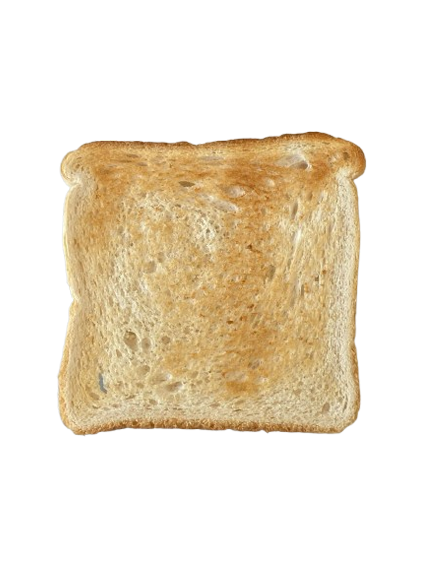
My master graduation project proposes engraved toast as a speculative alternative to Big Tech-managed communication.
I aim to raise awareness of the shortcomings and implications of our current digital infrastructure and invite people to imagine more creative alternatives.
The project has been presented at various exhibitions and as an interactive workshop, serving as an eye-catcher, a creative hands-on experience, or a nice conversation starter.
Interested in Spreading the Bread to your exhibition, workshop, or brunch? Or have another idea entirely? Don’t hesitate to reach out!
2024 – Design Research – Climate | Embodied | Participation
As climate anxiety becomes an increasingly common experience among young adults, questions around agency feel more urgent than ever.
This research project explored how young adults formulate their sense of agency in the climate crisis, using creative sessions inspired by Kristina Andersen’s Magic Machine Workshops. The format’s lighthearted and personal nature proved well-suited to uncovering people’s values, hopes, and concerns, while steering conversations away from helplessness and toward imagination.
Sietske Klooster’s De Melksalon project applied embodiment toward systemic change in the Dutch milk industry. THe project and developed metabolism of embodied design roles, tools and working principles are worth sharing.
Commissioned to help her pass on that knowledge, we designed the Itineration Station: a toolkit that supports the preparation, facilitation, and documentation of Sietske’s workshops. Drawing on the embodied approach that characterised De Melksalon itself, the kit helps participants engage more deeply with the experiences and ideas behind the project.
Team Members
Tessa van Maanen, Zander van den Elzen, Maud Vermeulen and Zitian Zhang
My bachelor graduation project explored how design can facilitate commoning practices and support transdisciplinary collaboration.
Working in the ‘minor key’, which centres open-endedness, creative exploration, and collective sense-making, I developed a toolkit and session for navigating complex, multi-actor challenges. Punch needle proposed a slow, hands-on practice, inviting reflection and implementing embodiment. Thus, grounding abstract conversations into personal and tangible materials.