
Professional Identity
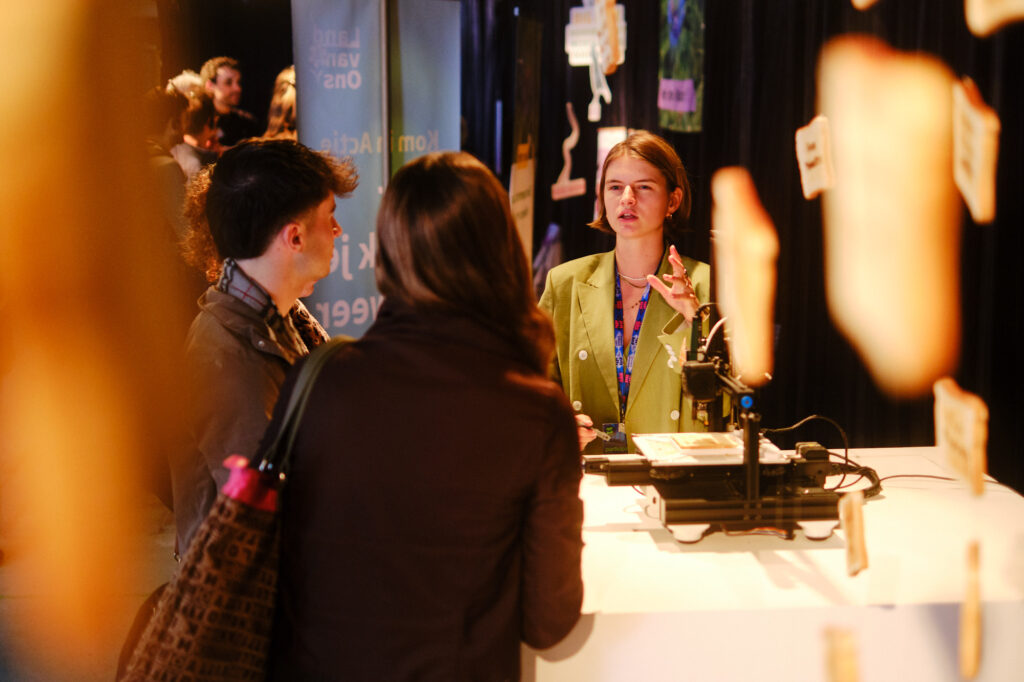
Lorem ipsum dolor sit amet, consectetur adipiscing elit. Ut elit tellus, luctus nec ullamcorper mattis, pulvinar dapibus leo.
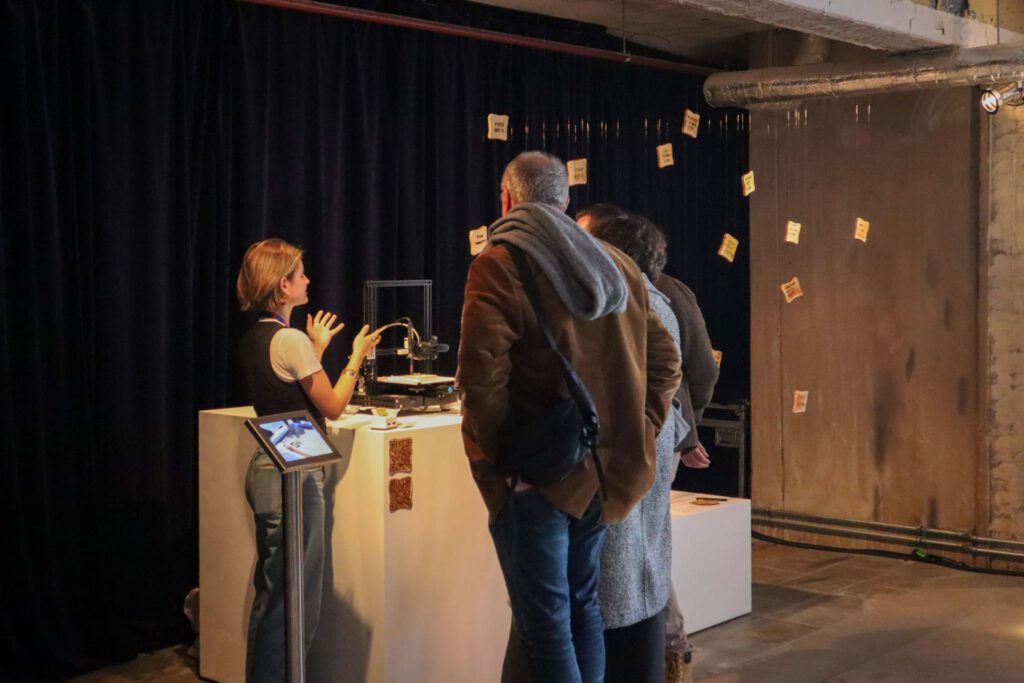
Lorem ipsum dolor sit amet, consectetur adipiscing elit. Ut elit tellus, luctus nec ullamcorper mattis, pulvinar dapibus leo.

Lorem ipsum dolor sit amet, consectetur adipiscing elit. Ut elit tellus, luctus nec ullamcorper mattis, pulvinar dapibus leo.
I am an assertive, critical, and inquisitive designer. Others have described my attitude as open, collaborative, and inspiring. I apply elements of participatory, speculative, and critical design. Therefore, my design approach can be defined as speculative social design. My design drive stems from a desire to explore, create, and share. I enjoy immersing myself in complex societal issues, expanding my understanding through making, and sharing my designs with peers, experts, and the general public.
I like to explore complex contexts through situated fieldwork, utilising my social skills and adopting a curious, humble attitude. My processes are iterative and open-ended. I do not follow a fixed order of phases or activities. Instead, continuous reflection on action guides my design choices. Next to my design process, reflection also plays a vital role in my designs. I often aim to trigger or facilitate critical reflection through creative collaboration, speculation, and the experience of alternatives.
In different settings, I consciously reflect on the role I take as a designer. When presenting or demonstrating, I often take a performative role to set the scene and draw people into speculation. During interactive sessions, I take on a facilitating role. In doing so, I remain aware of two extremes described by Manzini (2015). On the one hand, I risk becoming a ‘big ego’ designer, imposing my vision and leaving too little room for others’ input. On the other hand, I avoid becoming merely an administrative facilitator or ‘post-it’ designer. I apply openness, reflexivity, and responsiveness, while drawing on my critical and creative designerly perspective to steer clear of these extremes and create constructive, inquisitive atmospheres.
Speculative design plays a central role in my practice as a means to explore and expand my knowledge of, and attitude toward, complex societal challenges. My designs challenge the status quo, express my questioning or understanding, and contain inherent participatory affordances. They do not impose my perspective on others; instead, they provoke reflection, invite dialogue, and encourage the sharing of diverse viewpoints, deepening others’ understanding and my own while facilitating collaboration.
I aim to bridge the gap between niche and mainstream through speculative social design. In presenting performative speculative designs, I seek sensitivity in navigating the nuanced line between the ridiculous and the provocative, while remaining familiar and realistic. I apply technology to make concepts experienceable and tangible, providing something to discuss, question, or reflect upon. Within this, aesthetics play an essential role, shaping how people perceive, understand, and interact with my designs.
Like my design process, my design outcomes are often also inherently iterative. I strive to create designs that facilitate iteration: designs that can be built upon, appropriated, and adapted to diverse contexts or goals. Through creative and interactive means, I invite people to validate assumptions, share experiences, and reflect on their own positions. I use creativity as a means of empowerment and to facilitate connections, feeding new insights back into the design process and informing project outcomes.
My desired professional identity builds on this foundation and reflects my vision of the future role of the designer. I believe designers should have an explorative yet committed attitude: daring to fail, diving deep into complexity, and uncovering unexpected insights. They should trust their designerly intuition and curiosity but balance this with research, theory, and openness to other perspectives. Therefore, more continuous and strong implementation of theory is something I want to further develop.
Ultimately, I believe that collectively tackling complex societal problems requires open, honest, reflective, and imaginative exploration among people from across society. Therefore, I design to support imagination, collaboration, and reflection. By connecting people through creative, sometimes ridiculous interventions, I seek to create spaces where alternative futures can be imagined, discussed, and shaped together.
Vision
“…design to expand the capabilities of people to lead the kind of lives they value. And to do it in a sustainable way.” (Manzini, 2015, p.415 )
This quote by Manzini, in my opinion, illustrates the role design should play in our future. That of expanding people’s capabilities to make the change they want to see. The highly complex and intersectional issues we continue to face call for collective and imaginative efforts. Designers can both initiate and inspire change, but, more importantly, facilitate the intrapersonal and interpersonal reflections and connections needed to realise systemic change.
People’s faith in the intentions and responsible actions of Big Tech and governments related to communication, expression, and privacy is deteriorating (Amnesty International Netherlands, 2022; Calvin et al., 2025; Kharpal, 2021; Naji Bazzi, 2025; Sawers, 2016, 2025). As of now, the emphasis is on technological innovation and advancement. However, I believe social innovation, democratisation of change and policymaking, and more participatory practices hold a greater value in addressing societal problems such as the climate crisis, human rights violations, and Big Tech’s unchecked power.
Such complex societal problems often evolve quickly and unexpectedly, thus requiring ways of working that reflect and adapt to these changes. Open-endedness, flexibility and reflexivity are central to this Minor Key approach and often inherent to design processes. Therefore, designers are well placed to bring this competence to others. Rather than seeking fixed solutions, we should aim for continuous, adaptive, and situated resolutions that are directed at and stem from both individual changes and collaborations. Approaches like Speculative Design can engage and inspire people from different disciplines, cultures and interests to collectively and critically reflect on and imagine futures or alternatives (Iaconesi, 2019). Developing a sensitivity to the nuance between ridiculous and provocative, yet familiar and realistic, is essential when creating design narratives and experiential alternatives central to this approach.
These qualities of Speculative Design can be combined with Social Design practices in dedicated settings, such as workshop sessions, to deepen reflection, imagination, collaboration, and application to participants’ own practices or range of impact. Empowering people to better their practices and connecting them to work towards the systemic change that is needed for the future of our society and world.
The future calls not for one-size-fits-all designs that claim solutions, but for design that enables people to continuously and collectively find resolutions. I believe that through speculative social design, its participatory methods, creative, imaginative exploration and critical reflection, we can do just that.

Sources
Amnesty International Netherlands. (2022). Demonstratierecht onder Druk. https://www.amnesty.nl/wat-we-doen/demonstratierecht-in-nederland/rapport
Calvin, A., Lenhart, A., Hasse, A., Mann, S., & Robb, M. (2025). Teens, Trust, and Technology in the Age of AI: Navigating Trust in Online Content.
Iaconesi, S. (2019, June 27). Approaches, methods and tools for Speculative Design. SpeculativeEdu. https://speculativeedu.eu/approaches-methods-and-tools-for-speculative-design/
Kharpal, A. (2021, January 12). Signal and Telegram downloads surge after WhatsApp says it will share data with Facebook. CNBC. https://www.cnbc.com/2021/01/12/signal-telegram-downloads-surge-after-update-to-whatsapp-data-policy.html
Manzini, E. (2015). Design, When Everybody Designs: An Introduction to Design for Social Innovation (R. Coad, Trans.). Massachusetts Institute of Technology.
Naji Bazzi. (2025, February 11). From WhatsApp to Signal: Why are users making the switch? Modern Citizens. https://www.moderncitizens.com/post/from-whatsapp-to-signal-why-are-users-making-the-switch#:~:text=Dutch%20users%20are%20increasingly%20aware,with%20broader%20digital%20privacy%20concerns.
Sawers, P. (2016, November 17). Trump win drives more people to online privacy tools, including VPN and encrypted messaging. VentureBeat. https://venturebeat.com/security/trump-win-drives-more-people-to-online-privacy-tools-including-vpn-and-encrypted-messaging/
Sawers, P. (2025, March 2). Signal is the No. 1 downloaded app in the Netherlands. But why? Tech Crunch. https://techcrunch.com/2025/03/02/signal-is-the-number-one-downloaded-app-in-the-netherlands-but-why/#:~:text=Privacy%2Dfocused%20messaging%20app%20Signal,platforms%20such%20as%20Sensor%20Tower.