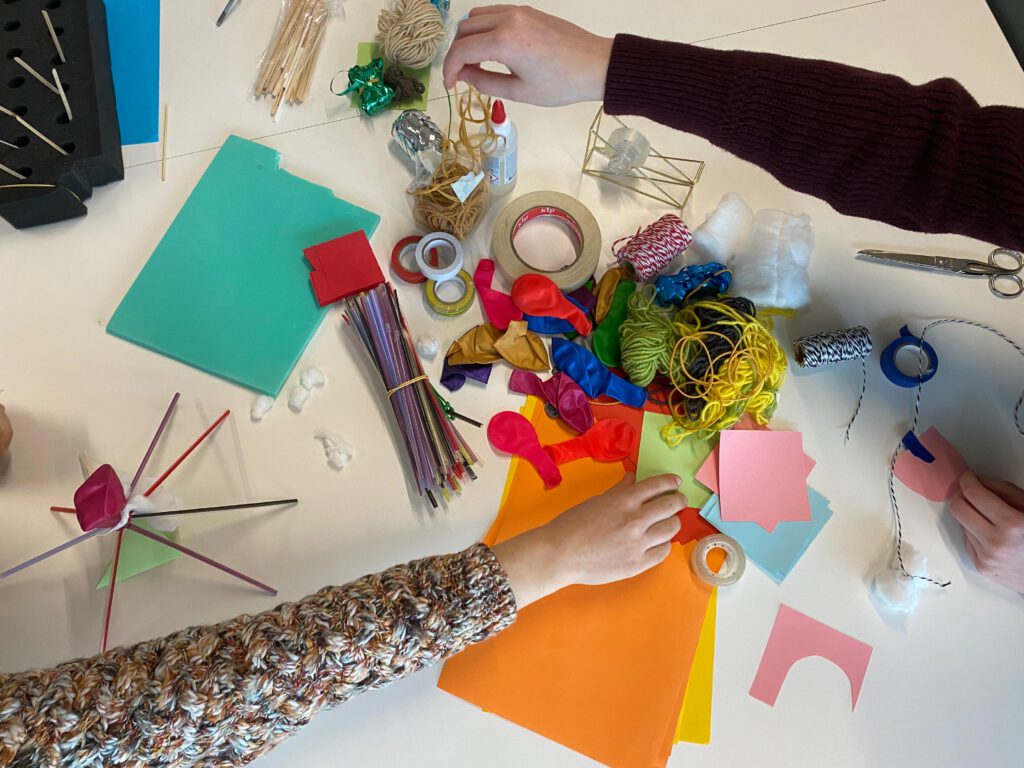
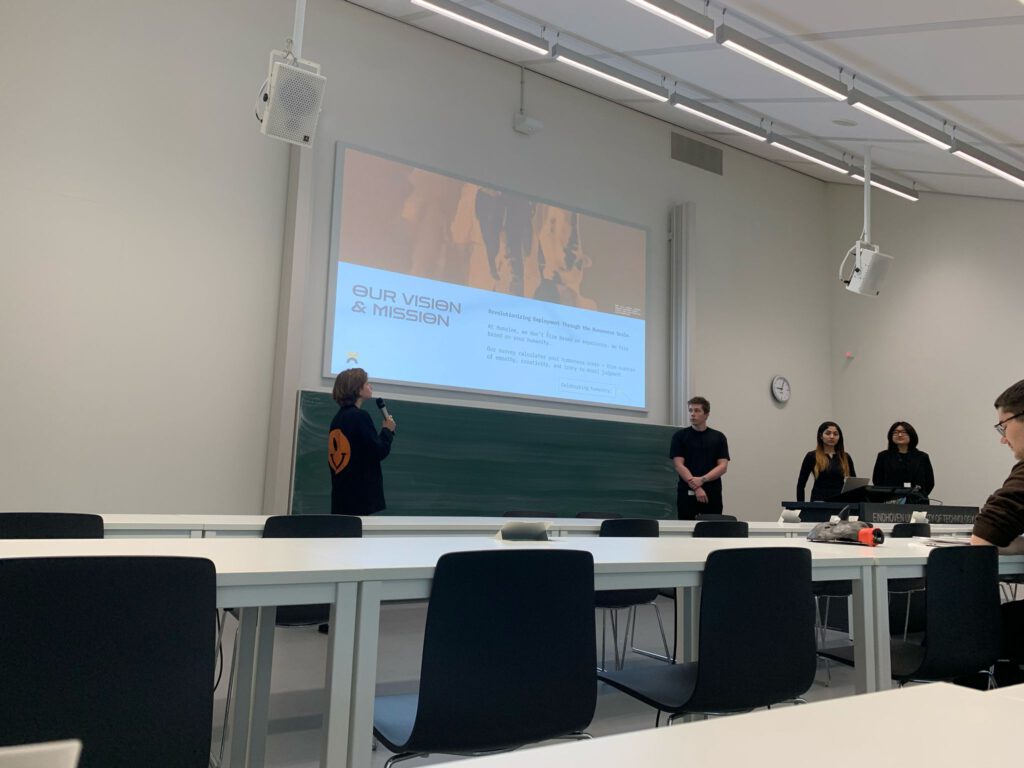
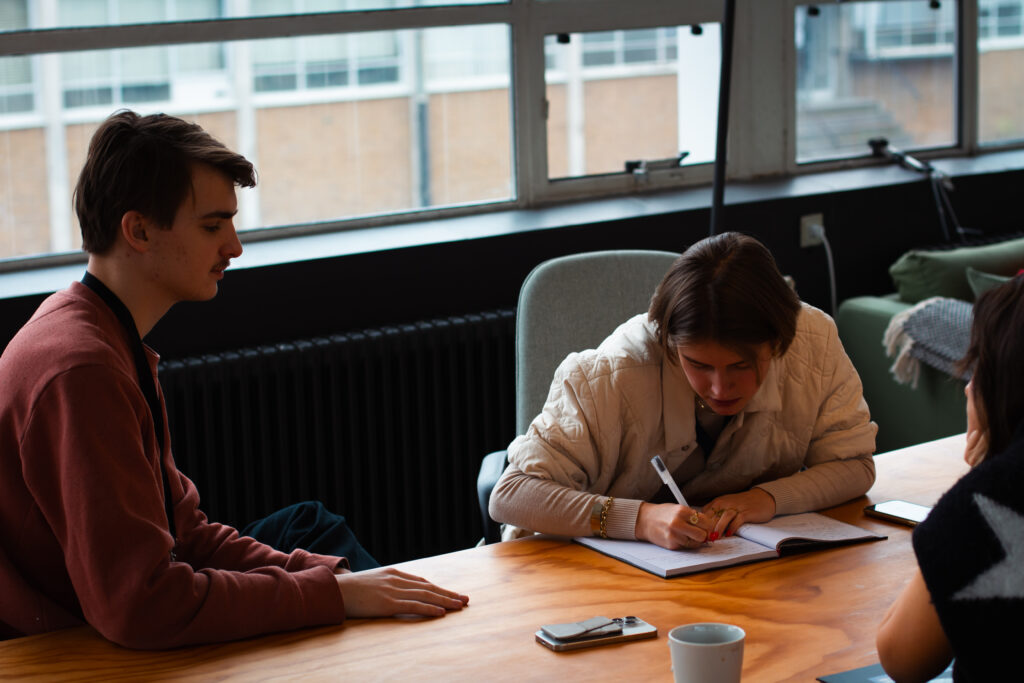
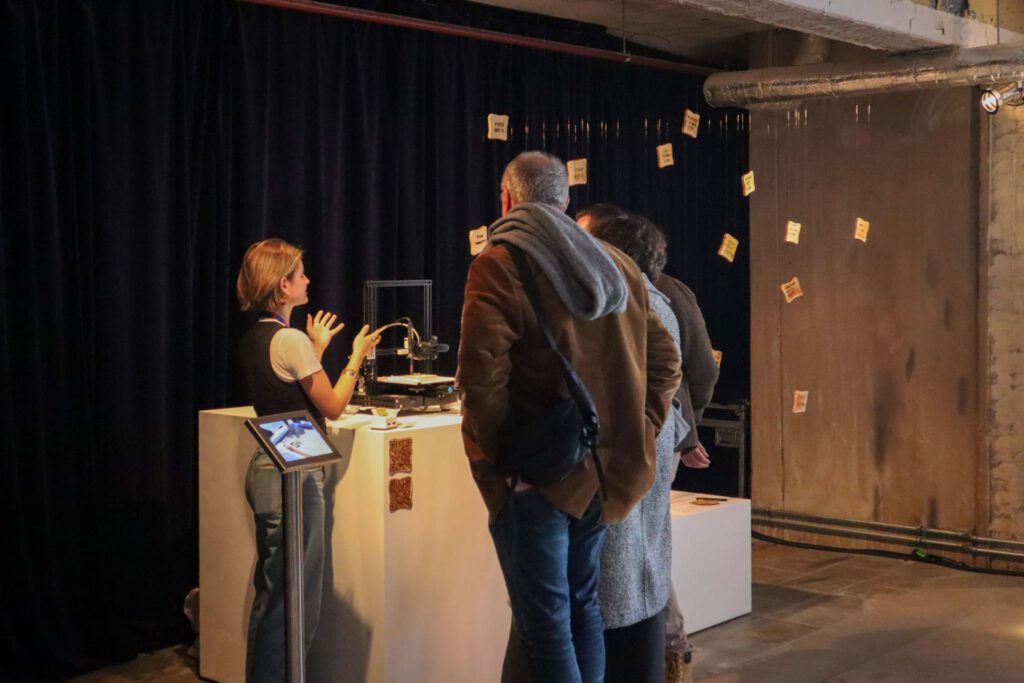
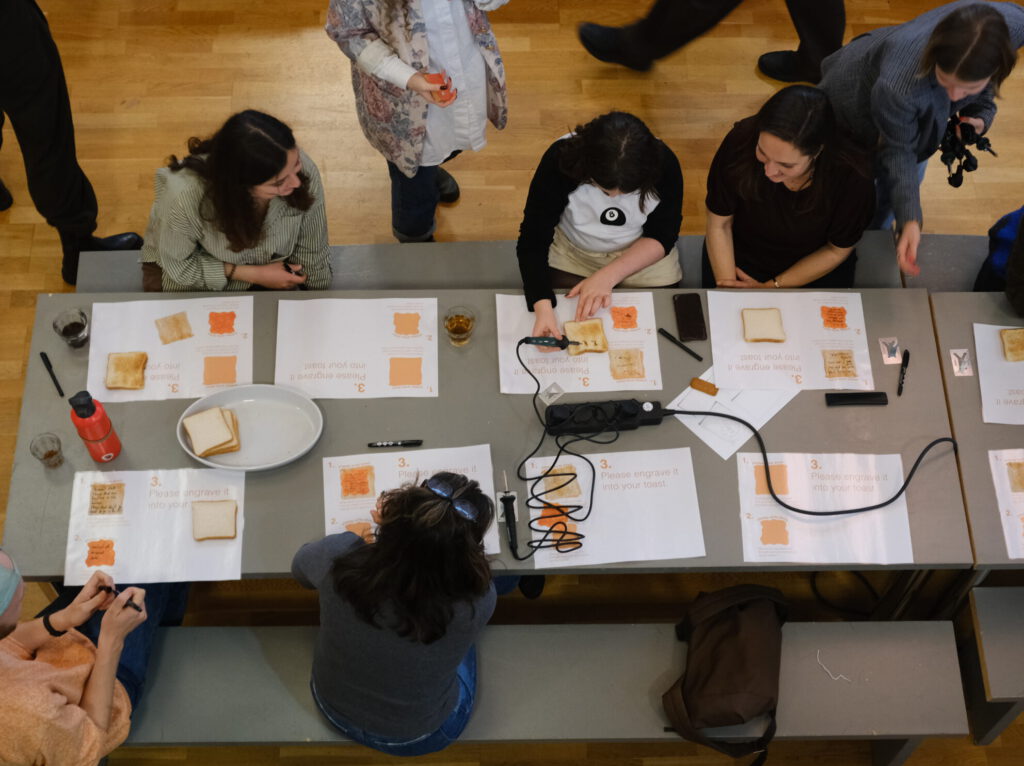
In different settings, I consciously reflect on the role I take as a designer. When presenting or demonstrating, I often take a performative role to set the scene and draw people into speculation. During interactive sessions, I take on a facilitating role. In doing so, I remain aware of two extremes described by Manzini (2015). On the one hand, I risk becoming a ‘big ego’ designer, imposing my vision and leaving too little room for others’ input. On the other hand, I avoid becoming merely an administrative facilitator or ‘post-it’ designer. I apply openness, reflexivity, and responsiveness, while drawing on my critical and creative designerly perspective to steer clear of these extremes and create constructive, inquisitive atmospheres.
Speculative design, design to trigger and support critical reflection on and rethinking of existing norms and imagine alternatives, plays a central role in my practice as a means of exploring and expanding my knowledge of, and attitude toward, complex societal challenges. My designs challenge the status quo, express my questioning or understanding, and contain inherent participatory affordances. They do not impose my perspective on others; instead, they provoke reflection, invite dialogue, and encourage the sharing of diverse viewpoints, deepening others’ understanding and my own while facilitating collaboration.
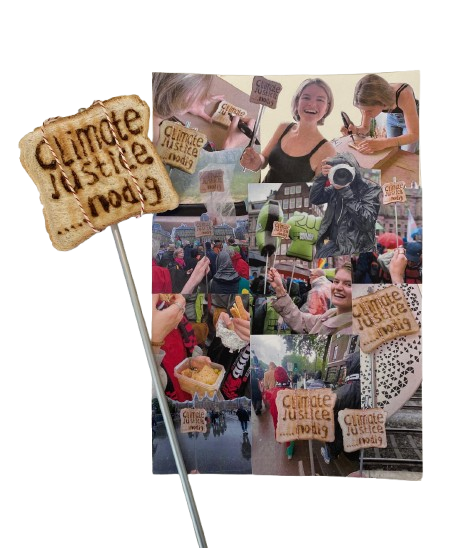
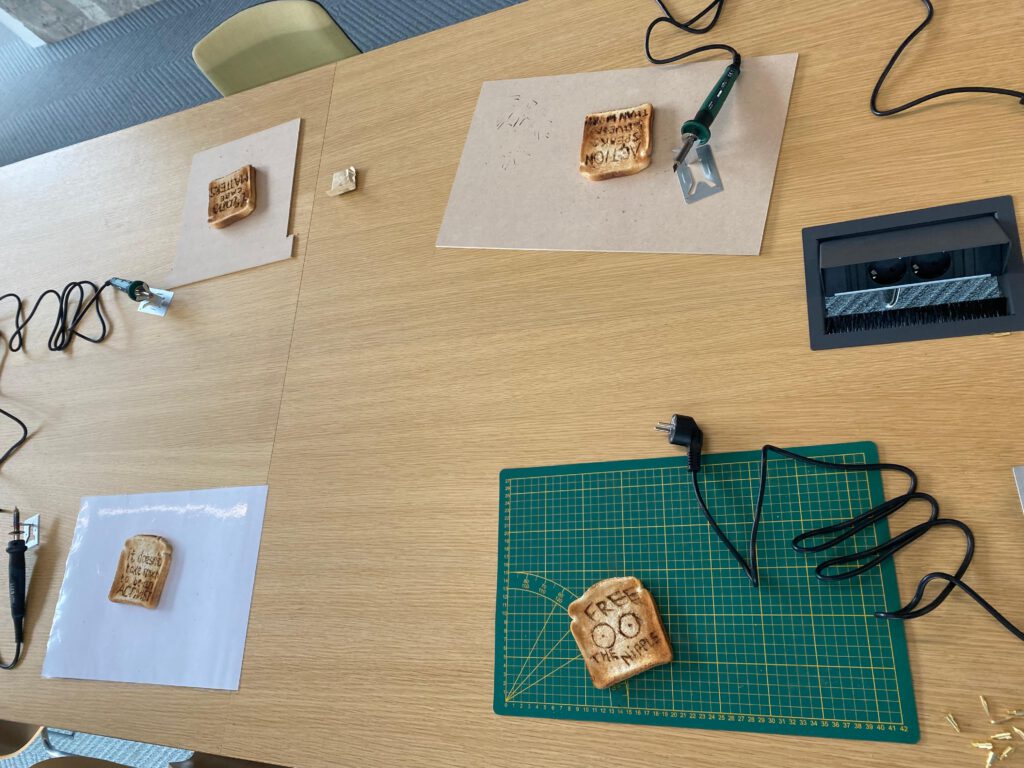
I aim to bridge the gap between niche and mainstream through speculative social design. In presenting performative speculative designs, I seek sensitivity in navigating the nuanced line between the ridiculous and the provocative, while remaining familiar and realistic. I apply technology to make concepts experienceable and tangible, providing something to discuss, question, or reflect upon. Within this, aesthetics play an essential role, shaping how people perceive, understand, and interact with my designs.
Like my design process, my design outcomes are often also inherently iterative. I strive to create designs that facilitate iteration: designs that can be built upon, appropriated, and adapted to diverse contexts or goals. Through creative, interactive means, I invite people to investigate and unpack assumptions, share experiences, and reflect on their positions and the status quo. I use creativity as a means of empowerment and to facilitate connections, feeding new insights back into the design process and informing project outcomes.
My desired professional identity builds on this foundation and supports my vision. I believe designers should adopt an explorative yet committed attitude: daring to fail, engaging deeply with complexity, and uncovering unexpected insights. I strive to balance my designerly intuition and curiosity with stronger research, theory and openness to other perspectives. Strengthening this integration, through more consistent application of theory, is a central part of my desired professional identity.
Ultimately, I believe that collectively tackling complex societal problems requires open, honest, reflective, and imaginative exploration among people from across society. Therefore, I design to support imagination, collaboration, and reflection. By connecting people through creative, sometimes ridiculous interventions, I seek to create spaces where alternative futures can be imagined, discussed, and shaped together.